me: "Hi, this is Gina, how may I help you?"
him: "I AM FREAKING OUT RIGHT NOW!"
me: "Why? What's wrong?" (I am only moderately concerned)
him: "THERE'S A BUG IN MY SALAD!"
me: "Hmmmm...really? That sucks. I'm surprised it survived the washing and fridge overnight."
him: "IT'S STILL MOVING! I ALMOST ATE IT! IT'S A LITTLE GREEN BUG!
me: Silence. I know what's coming...
him: "I AM NEVER EATING THIS SALAD AGAIN!"
I washed it. Three times! I swear! I have this technique of washing my homegrown salad greens where I put them in the salad spinner and fill the bowl with cold water and let them sit for a few minutes. You know, so the bugs will drown and float to the top. I do that three times and usually it works. God! I have run across some crazy shit in those salad greens. I am particularly creeped out by earwigs so when they crawl out of the salad greens onto my hand while I'm picking them or washing them it's all I can do not to scream bloody murder. My goal is to remain calm so as not to alert my husband who is even more creeped out by bugs in the garden than I am. It is hard enough to get him to eat the food I grow after he watches squirrels and rabbits frolicking amongst the food but bugs that survived the cleaning process? Forget it.
I have written about my husband's pest issues before. How he used to keep a pile of rocks by the back door of the 2nd floor two flat apartment we rented. He'd put a couple in his pocket in case he encountered a squirrel in the yard on the way to the train in the mornings. In his defense, the squirrels were very aggressive, probably because the folks next door fed them all manner of food right out of their kitchen. We once found a partially eaten hot dog with a bun on our back porch which we assumed had been dragged up there by a squirrel. And then there's the time he accidentally ran over the baby rabbits with the lawn mower. He left the lawn mower sitting in the middle of the yard and refused to mow the grass for 3 years. I was content paying for the service because they helped me weed the garden, too. But then they "weeded" my strawberries, so I fired them. And the next ones "weeded" an expensive Autumn Moon Japanese Maple and some other nice plants so I fired them, too. I digress.
I'm making light of it here but bugs and animals in the garden are just part of the organic home garden. I wish somebody would tell me how to wash my salad greens in a manner that would remove 100% of bugs 100% of the time. Or how to convince my husband that a bug or a squirrel in the garden isn't the end of the world. That just because grocery store salad comes in a nice clear crispy plastic bag doesn't mean it's really clean or safe. I guarantee we'll never get e. coli from my homegrown salad greens!
me: "J says to tell you that you can either deal with an occasional bug in your salad or a lifetime of pesticide"
him: "I'll take the pesticide"
Showing posts with label salad greens. Show all posts
Showing posts with label salad greens. Show all posts
Friday, July 8, 2011


Saturday, June 11, 2011
Grow Swill Chard for Beauty and Versatility
I had to laugh at myself for ranting about not growing eggplant this year only because it's pretty considering that's the biggest reason I grew swiss chard for the first time last year.
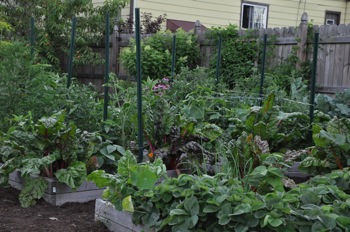
Growing up in the south, I don't recall ever eating swiss chard, or seeing my friends eat swiss chard or ever even hearing of swiss chard. I'm sure it exists there but unfortunately, I wasn't shopping in the fresh vegetable section of the grocery store much and I didn't garden back then. After I moved to Chicago and started gardening and blogging I discovered it on blogs, pictures of it drawing me in.
There is something about swiss chard, the way the light colored stalks statuesquely support the giant deep green leaves. I am mesmerized by the way the veins squiggle through the leaves. Swiss chard commands attention. It's striking in a way no other greens are. And the rainbow varieties with their bright colored stems seem more like vegetables that would exist only in fairy tale gardens where cinematographers have manipulated everything into bigger brighter, more beautiful versions that could never exist in real life. They're just incredible.
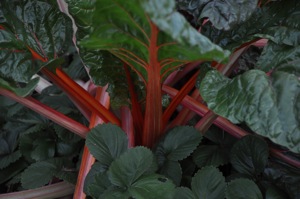
Last year I direct sowed swiss chard into the corners of all 6 of my raised beds and they grew bigger and more beautiful all summer, not going to seed until the very end of the growing season. I was amazed how tucking them in could make my garden look so pretty. "Holy Crap! Look at that chard!", one friend said as she stood on her tip toes peering out my kitchen window one late August afternoon. It was huge by then, the sun gold cherry tomatoes I hadn't properly staked dangling over the top of a fuchia one, yellow nasturtium rambling through an orange one. All the other plants crowded them but they didn't seem to mind.
Besides looking cool, swiss chard is also incredibly versatile. In fact, it is one of the vegetables that fits all three of the dishes I'm pledging to cook more of and plan my garden around this year. When mature, the leaves are firm enough to hold up nicely in soups and stir fry and it is fabulous picked young and eaten in mixed green salads. So I hear.
Truth be told, I only cooked swiss chard once last summer, sauteed in olive oil with a little garlic. The texture was silky with a wonderful buttery flavor. Since then, I'm deep in a soup and stir fry cooking frenzy and swiss chard keeps coming up in recipes. This year I'll sow the seeds early and heavily in parts of my garden so that I can harvest the young leaves for salads and leave some to grow larger, chop them up and add them to stir fry. I'll also try freezing it for soups I'll make when the garden is finished and resting under a blanket of snow.
If you haven't tried growing swiss chard, give it a shot. Whether you need it to be utilitarian or just pretty, it won't fail you. And if you've got a great recipe for swiss chard, please share it.
Go here to vote for swiss chard at One Seed Chicago before April.
Wednesday, January 12, 2011
Grow Swiss Chard for Beauty and Versatility
I had to laugh at myself for ranting about not growing eggplant this year only because it's pretty considering that's the biggest reason I grew swiss chard for the first time last year.

Growing up in the south, I don't recall ever eating swiss chard, or seeing my friends eat swiss chard or ever even hearing of swiss chard. I'm sure it exists there but unfortunately, I wasn't shopping in the fresh vegetable section of the grocery store much and I didn't garden back then. After I moved to Chicago and started gardening and blogging I discovered it on blogs, pictures of it drawing me in.

There is something about swiss chard, the way the light colored stalks statuesquely support the giant deep green leaves. I am mesmerized by the way the veins squiggle through the leaves. Swiss chard commands attention. It's striking in a way no other greens are. And the rainbow varieties with their bright colored stems seem more like vegetables that would exist only in fairy tale gardens where cinematographers have manipulated everything into bigger brighter, more beautiful versions that could never exist in real life. They're just incredible.
Last year I direct sowed swiss chard into the corners of all 6 of my raised beds and they grew bigger and more beautiful all summer, not going to seed until the very end of the growing season. I was amazed how tucking them in could make my garden look so pretty. "Holy Crap! Look at that chard!", one friend said as she stood on her tip toes peering out my kitchen window one late August afternoon. It was huge by then, the sun gold cherry tomatoes I hadn't properly staked dangling over the top of a fuchia one, yellow nasturtium rambling through an orange one. All the other plants crowded them but they didn't seem to mind.
Besides looking cool, swiss chard is also incredibly versatile. In fact, it is one of the vegetables that fits all three of the dishes I'm pledging to cook more of and plan my garden around this year. When mature, the leaves are firm enough to hold up nicely in soups and stir fry and it is fabulous picked young and eaten in mixed green salads. So I hear.
Truth be told, I only cooked swiss chard once last summer, sauteed in olive oil with a little garlic. The texture was silky with a wonderful buttery flavor. Since then, I'm deep in a soup and stir fry cooking frenzy and swiss chard keeps coming up in recipes. This year I'll sow the seeds early and heavily in parts of my garden so that I can harvest the young leaves for salads and leave some to grow larger, chop them up and add them to stir fry. I'll also try freezing it for soups I'll make when the garden is finished and resting under a blanket of snow.
If you haven't tried growing swiss chard, give it a shot. Whether you need it to be utilitarian or just pretty, it won't fail you. And if you've got a great recipe for swiss chard, please share it.
Saturday, January 8, 2011
Grow What You Eat

I'll be honest, I don't even like eggplant. Yet, I grow it nearly every year. I am seduced by it's beauty. Those giant deep purple fruits nestled behind the leaves of the plant excite me. For some reason, looking for the eggplant always reminds me of hunting Easter eggs and finding the special golden ones. When I pick them, I put them on the kitchen counter in a place where I can see them from the living room and marvel at their beauty, rearranging them when I walk by like I used to do Christmas presents under the tree. Then reality sets in. What the hell am I gonna do with these? I hate eggplant! While I love sending fresh veggies to work with my husband who gives them away to his veggie loving coworkers, I'm tired of buying fresh, out of season veggies for all the soups I'm making this winter. So in 2011, I'm on a mission to focus on growing what I actually eat. Eggplant, I'll miss you.
Planting with a purpose:
- Soup
- Salad
- Stir fry
- Tomatoes (in my garden, these get their own category)
Instead of perusing the seed catalogs, ordering seeds whose description or pictures have seduced me, I'll have my cookbooks by my side, selecting seeds from ingredients used in my favorite recipes. And instead of stressing about cooking everything at the moment it's ripe, I'll focus on perfecting my freezing skills. I never grow carrots because I don't like to eat them raw. Gasp! Yet I continue to buy them at the grocery for soup recipes, lecturing myself the whole way. These are so easy to grow! They don't even take up much space in the garden! God knows where these things even came from! Or what they've been sprayed with! Bad gardener!
Are you guilty of growing veggies you have no intention of eating, too? Or not growing ones you do eat for some dumb reason like me? If so, I'd like to know about it.
Friday, May 28, 2010
First Harvest: Organic Home Grown Salad Greens

Some gardeners are intimidated to grow salad greens but take it from me, they're about the easiest, most rewarding things you can grow in your garden. Get yourself a pack of mesclun seed mix, scatter them lightly over the dirt, then sprinkle a little dirt over the top of the seeds, barely covering them. And water. You can plant a little every three weeks and your family will be stocked with fresh organic salad all summer.
Organic salad greens are expensive. Plus, I hate the pressure of buying a big container of them then stressing about eating them before they go bad. Remember, by the time grocery store salad greens make it to your kitchen, they may have traveled over 1,500 miles. They won't last long! But grown in your personal garden, you can pick enough for each meal and leave the rest growing outside where they belong.
The hardest thing about growing salad greens is their tendency to bolt in the hot summer. Are you growing a super heat tolerant salad green? Leave a comment telling me which one it is so I can try it, myself.
Subscribe to:
Posts (Atom)
